What is a Fire Cable and How Does It Work?
Fire cables serve a crucial purpose in safety systems and electrical installations. These specialized cables are designed to maintain their functionality during high temperatures. Their insulation is robust, ensuring they can withstand flames and heat. This quality makes fire cables essential in emergency scenarios.
Understanding fire cables means recognizing their construction. They typically feature fire-resistant materials. This ensures they can operate in extreme conditions. Fire cables are often used in buildings where safety is a priority, like hospitals and schools. They provide a reliable means of communication and power supply when emergencies occur.
Despite their importance, fire cables can be misunderstood. Many people are unaware of their specific applications. Some might believe any cable can perform the same functions. However, only fire cables are built to endure harsh environments. Knowing the differences can prevent potential hazards. As we delve deeper into this topic, we will explore how fire cables work and their vital role in safety.
What is a Fire Cable? Definition and Basic Characteristics
Fire cables are specialized cables designed for the protection of electrical circuits during a fire. They are constructed with materials that can withstand high temperatures and resist combustion. The main purpose is to ensure that critical systems remain operational when exposed to extreme heat. This capability is essential in buildings such as hospitals and data centers, where the continuity of operations can be life-saving.
According to a report by the Global Fire Cable Market, the demand for fire-resistant cables is rapidly increasing. The market is expected to grow at a compound annual growth rate of 6.5% over the next few years. This growth is driven by stricter building codes and the increasing awareness of fire safety. Fire cables use materials like thermosetting polymers and specific insulation types to enhance their durability. Many installations still fail to consider the age of existing infrastructure, leading to potential vulnerabilities.
Notably, fire cables also come with specific ratings, such as the LPCB certification, which offers assurance of performance during a fire event. Despite advancements, a noticeable gap remains in the widespread adoption of these cables. Some users are hesitant, often due to cost concerns or lack of awareness about benefits. Encouraging education and awareness can bridge this gap, leading to safer environments.
Fire Cable Characteristics and Usage
The Importance of Fire Resistance Ratings in Cable Specifications
Fire resistance ratings are critical in cable specifications. These ratings indicate how well a cable can withstand fire conditions. A higher rating suggests better performance in a fire. This is vital for safety in buildings and other structures.
Many factors influence fire resistance ratings. For example, the materials used in the cable matter significantly. Different insulation types can affect how long a cable stays intact in a fire. Some cables may melt or fail quickly, while others withstand heat for extended periods.
However, misunderstandings about these ratings can arise. Not all fire-resistant cables are created equal. In some cases, installers focus more on cost than safety. This can lead to disappointing outcomes during emergencies. It’s essential to carefully evaluate cable specifications to ensure safety and compliance.
Key Components of Fire Cables: Materials Used and Their Properties
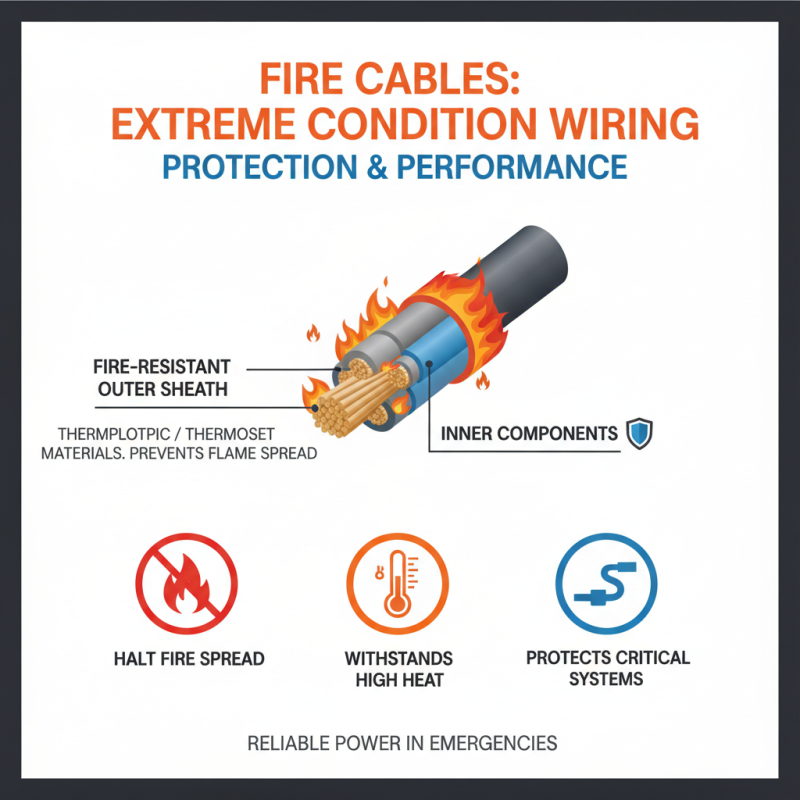
Fire cables are specially designed to handle extreme conditions in case of a fire. The materials used in these cables play a crucial role in their effectiveness. The outer layer is often made from fire-resistant thermoplastic or thermoset materials. These materials help to prevent the spread of flames and protect the inner components.
Inside the fire cables, you typically find copper conductors. Copper is known for its excellent conductivity, which ensures reliable transmission of signals. The insulation around these conductors often consists of low smoke and halogen-free materials. These properties minimize toxic smoke and reduce hazards during a fire situation.
Interestingly, while fire cables are designed to be resilient, achieving perfection in their manufacturing remains a challenge. Any flaw in the insulation or conductor can compromise safety. This highlights the need for rigorous testing and quality control. Often overlooked, proper installation is equally vital. If not secured correctly, even the best materials can fail. Understanding these elements is essential for ensuring safety in fire-prone environments.
How Fire Cables Function During a Fire Emergency Situations
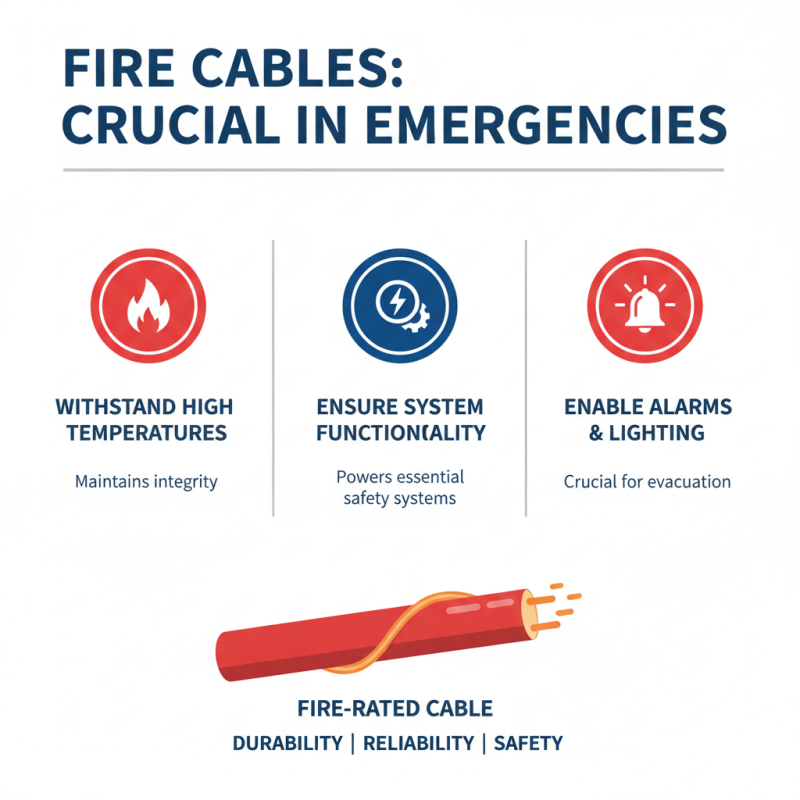
Fire cables play a crucial role during emergencies. They are designed to withstand high temperatures and maintain functionality. In a fire, these cables ensure that essential safety systems continue to operate. Their durability allows for the ongoing operation of alarms and emergency lighting.
During a fire, most cables become useless. However, fire cables resist ignition and burning. This characteristic is vital for communication lines in buildings. When flames engulf an area, uninterrupted signals can guide evacuations. Fire cables can be the difference between chaos and safety.
Nevertheless, not every building uses fire cables. Some older structures may overlook this safety feature. It is troubling that not all regulations enforce their installation. Even new constructions can sometimes cut corners. Ensuring that proper fire cables are installed can save lives. Awareness and action can lead to better outcomes in emergencies.
Industry Standards and Testing Procedures for Fire Cables Compliance
Fire cables are essential components in fire safety systems. They must comply with various industry standards. These standards ensure that fire cables perform well in emergencies. Meeting these requirements involves rigorous testing procedures.
Testing procedures for fire cables include exposure to high temperatures and flames. The cables must maintain functionality under distressing conditions. Compliance tests assess insulation integrity and flame resistance. Many manufacturers struggle to pass initial tests, needing multiple iterations. This reflects the complexity of ensuring safety in fire protection systems.
Documentation of testing results is crucial for compliance. Regulators review these documents to ensure reliability. Some manufacturers may overlook this step, leading to compliance issues. Regular audits can help maintain standard adherence. Continuous improvement should be a focus for all manufacturers. Fire safety is paramount, and every detail matters in this industry.
What is a Fire Cable and How Does It Work? - Industry Standards and Testing Procedures for Fire Cables Compliance
| Dimension |
Description |
Industry Standard |
Testing Procedure |
| Conductor Material |
Typically copper for good conductivity and low resistance. |
IEC 60332 |
Vertical Flame Test |
| Insulation Type |
Fire-resistant materials such as LSZH (Low Smoke Zero Halogen). |
BS 7629-1 |
Heat Release Test |
| Cable Construction |
Multiple twisted pairs for improved resistance to interference. |
BS EN 50200 |
Fire-Resistant Test |
| Rating |
Cables rated for various applications such as buildings, tunnels, and industries. |
EN 13501-6 |
Classification Test |
| Diameter |
Varies by application; may range from 1.5mm to 25mm depending on conductor size. |
IEC 60228 |
Dimensional Measurement |