Toll Free: 866.905.6744 | Local: 845.652.5250

10 Essential Tips for Choosing the Right PV Wire for Your Solar Projects?

When embarking on solar projects, one crucial component deserves careful consideration: the PV wire. The right wiring directly affects the efficiency and safety of solar installations. According to a report from the Solar Energy Industries Association, improper wire selection can lead to significant energy losses and safety hazards.

Expert Mark Thompson, a leading figure in the photovoltaic industry, emphasizes, “Selecting appropriate PV wire can enhance performance and longevity.” His insights remind us how the choice of wire can impact overall system reliability. Many installers overlook details such as temperature rating and UV resistance, which can lead to failures down the line.

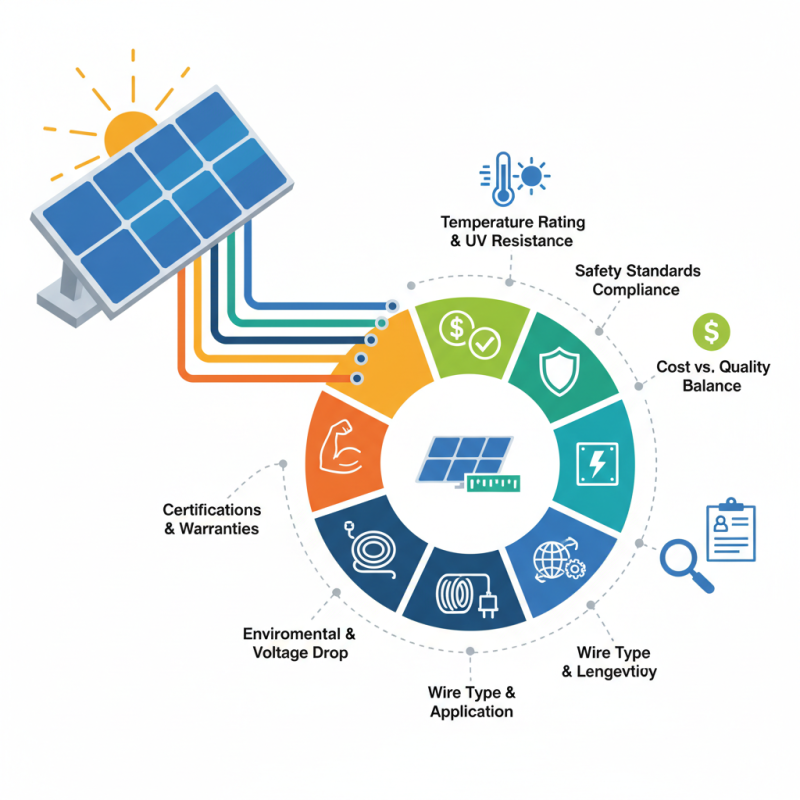
PV wires come in various types and ratings, each designed for specific environments and applications. Users must balance cost with quality, a challenge that often requires deeper reflection. Making informed choices about PV wire is essential for sustainable energy solutions. Neglecting these considerations can come back to haunt projects, compromising their success and safety.
10 Essential Tips for Choosing the Right PV Wire for Your Solar Projects?

Understanding PV Wire: Key Characteristics and Types

When selecting the right PV wire, understanding its key characteristics is critical. PV wires are specifically designed for solar applications. They must withstand outdoor conditions. UV stability and temperature resistance are essential features. According to the National Renewable Energy Laboratory (NREL), the right wire can increase system reliability and efficiency.

Different types of PV wires exist. For instance, THHN and PV Solar cables are common. THHN is versatile but not always optimal for long-term sun exposure. PV Solar cables have enhanced insulation. They endure extreme temperatures, making them suitable for various climates. A report from the Solar Energy Industries Association (SEIA) notes that improper wire selection can lead to 25% reduced energy output over time.

Quality standards matter. UL 4703 is a vital certification. It ensures safety and performance. However, not all wires meet these standards. Many installers may overlook this detail. It could jeopardize the entire solar project. Experience and research are necessary to avoid pitfalls. Informed choices on wire types can significantly affect overall energy generation and the longevity of solar systems.

10 Essential Tips for Choosing the Right PV Wire for Your Solar Projects

Tip Number Tip Description Key Characteristics Wire Type
1 Choose the right gauge for your system. Higher gauge means thinner wire; consider current capacity. PV Wire, THHN
2 Verify insulation material. Should withstand UV exposure and extreme temperatures. Ethanol-based PV wire, TPE
3 Look for sunlight resistance ratings. UL 4703 or IEC 62930 certifications. PV Wire
4 Assess the voltage rating. Select wire rated significantly above system voltage. 600V, 1000V
5 Evaluate temperature range. Wire should perform well in heat and cold. UL (e.g., -40°C to 90°C)
6 Consider flexibility for installation. Stranded wire is more flexible than solid wire. Stranded, Solid
7 Check for rodent resistance. Special coatings can deter pests. Tinned Copper, Coated Wire
8 Review your project’s length requirements. Long runs may need thicker wire to reduce voltage drop. Various gauges available
9 Consider the environment of installation. Will it be exposed to moisture, salt, or harsh chemicals? Corrosion-resistant types preferred
10 Consult manufacturer guidelines. Ensure compatibility with components and standards. Manufacturer specifications

Evaluating Voltage Ratings for Optimal Performance in Solar Systems

10 Essential Tips for Choosing the Right PV Wire for Your Solar Projects?

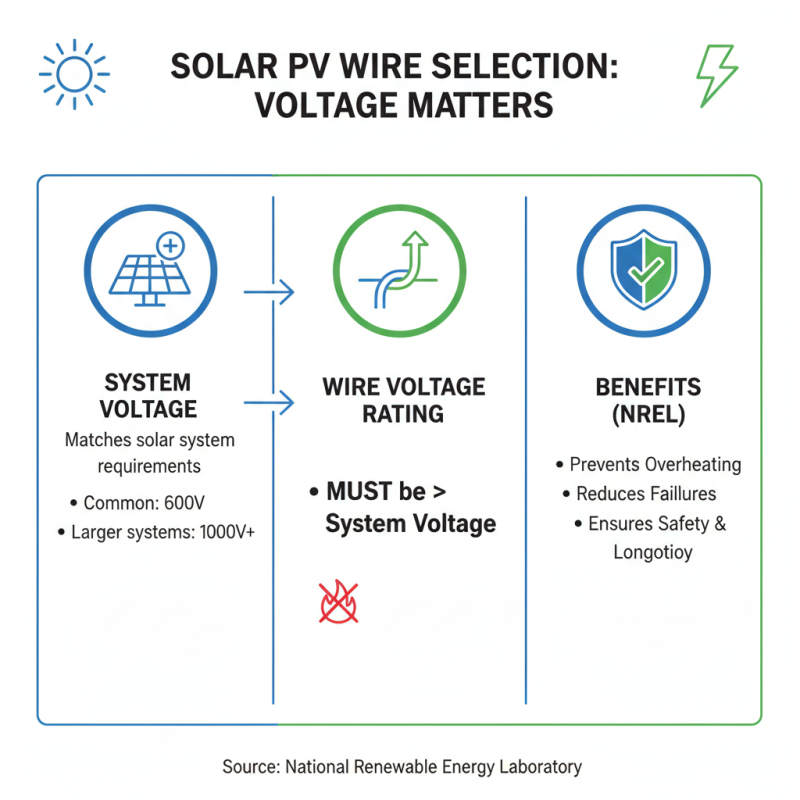
Choosing the right PV wire for solar projects is crucial. One of the most significant factors is the voltage rating. In general, the voltage rating should match the solar system's requirements. Many solar applications operate at 600V, but some systems may reach 1000V. According to the National Renewable Energy Laboratory, using wires rated above the system's maximum voltage prevents overheating and potential failures.

Another important aspect is the insulation type. Materials like PVC and XLPE serve different purposes. PVC has lower heat tolerance, while XLPE can handle higher temperatures and resist moisture better. The wrong choice can lead to decreased efficiency. For instance, improper insulation can restrict current flow and increase energy loss. Reports indicate that even a small drop in efficiency can lead to significant losses over time.

Installation conditions also matter. Factors such as UV exposure and temperature fluctuations can impact wire longevity. It’s wise to choose wires that are resistant to these elements. Research shows that wires exposed to harsh conditions may only last five to ten years. This consideration is critical for ensuring long-term performance and reliability in solar installations.

Assessing Temperature Range and Environmental Resistance in PV Wires

10 Essential Tips for Choosing the Right PV Wire for Your Solar Projects?

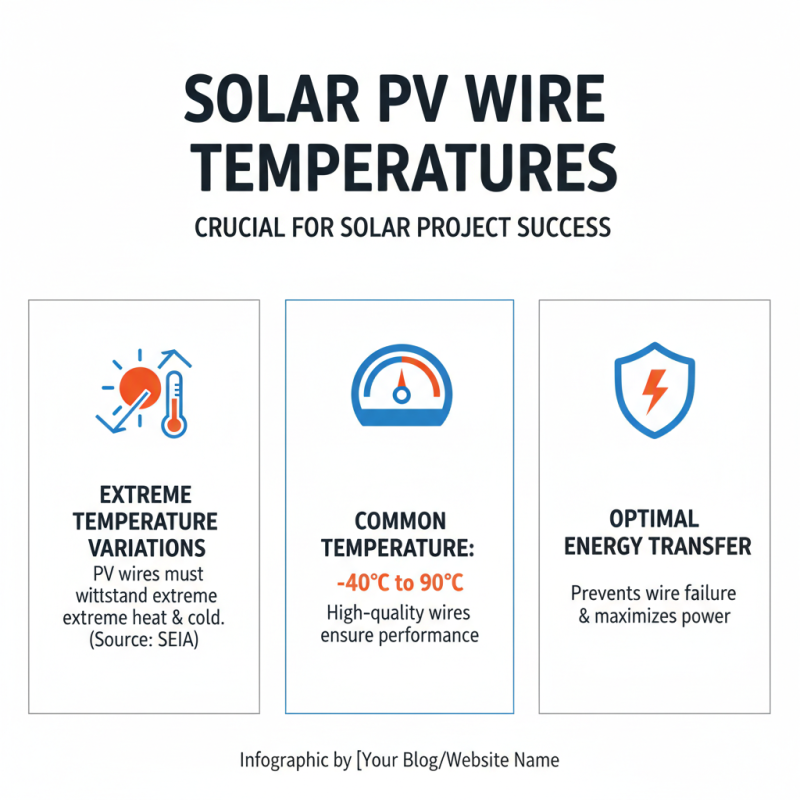
When selecting photovoltaic (PV) wires for solar projects, assessing the temperature range is crucial. According to the Solar Energy Industries Association (SEIA), solar installations face extreme temperature variations. PV wires must withstand these shifts. Common temperature ratings for high-quality PV wires range from -40°C to 90°C, ensuring performance across various climates. This range helps prevent wire failure and ensures optimal energy transfer.

Environmental resistance is another vital factor. PV wires often encounter UV radiation, moisture, and mechanical stresses. The California Energy Commission states that properly rated wires can resist degradation from environmental factors. The performance of PV installations varies greatly based on the wire's environment. For instance, wires installed in coastal areas may need better salt resistance. Not all wires are designed for these conditions. Failing to evaluate this could lead to costly repairs and reduced energy output.

Being aware of these factors can lead to better choices, yet many overlook them. Some installations suffer from premature wire failures due to environmental neglect. Identifying a wire's suitability for specific conditions is essential but often underestimated. Evaluate performance and select wisely to avoid pitfalls.

Selecting Appropriate Wire Gauge for Current Carrying Capacity

Choosing the right wire gauge is crucial for the efficiency of your solar projects. The wire gauge affects current carrying capacity, which is essential for optimal performance. Thicker wires have lower resistance and can carry more current. This means they reduce energy loss. Using the wrong gauge can lead to overheating and even damage.

Calculate the current your solar system will generate. Consider all components like panels and inverters. Then, refer to a wire gauge chart to determine the appropriate size. A common mistake is choosing a wire that's too thin. This can restrict current flow and cause inefficiency. Not all installations are the same; factor in the length of the wire run as well.

Think about the environment too. Extreme temperatures affect wire performance. If the wire sits in the sun or is exposed to moisture, it may degrade faster. Reflect on whether your installation can withstand these factors. Each aspect can influence your choice in wire gauge and its long-term performance in a solar energy system.

Comparing Costs and Durability Among Different PV Wire Manufacturers

When selecting PV wire for solar projects, cost and durability should be top considerations. Some manufacturers offer similar prices, but differences in wire quality can be significant. Cheaper wires may save money upfront but can lead to higher maintenance costs later. Look closely at the materials used. Wires made with PVDF coating tend to perform better over time.

Evaluate warranty options provided by different manufacturers. A longer warranty suggests greater confidence in the product's durability. It's wise to question what the warranty covers. Some companies might be vague about their terms. This can lead to costly surprises when a wire fails prematurely.

Tip: Always request samples before committing to large orders. Testing samples in real conditions helps determine their performance. Not all wires behave the same under extreme weather conditions. You might find that some manufacturers have consistent performance records while others might not. It’s crucial to gather data on how the wire holds up over time.

Cost and Durability Comparison of PV Wires